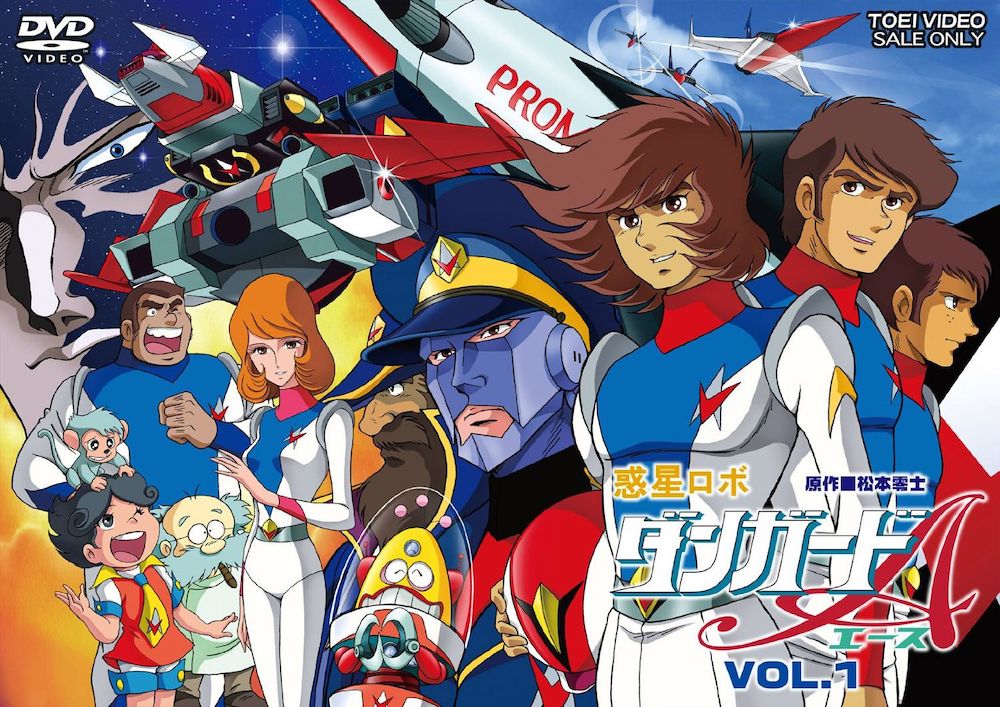
• Planetary Robo Danguard Ace ran from March 1977 to March 1978 and gave us 56 episodes. Matsumoto Leiji is listed as the original creator and it certainly bears his mark. Not only the character designs but the message at the end that “youth must survive” was his trademark. The show traces the efforts of 2 groups as they attempt to reach the 10th planet Promete at the outer edge of our solar system (Pluto was still a planet in 1977). The heroes are JASDAM while the villains are the Doppler Army.
    Planetary Robo Danguard Ace

    Matsumoto shied away from nationalistic fervor so the heroes don’t represent any nation or the United Nations. They are a scientific organization called JASDAM that was formed to reach the newly discovered planet Promete. How that organization got funding to match a nation’s budget or permission to develop and use military-grade weapons is never mentioned. Opposing them is the Doppler Army formed by a rogue scientist named Doppler. How Doppler recruited so many people or bankrolled a private military and space exploration force at the same time is never explained. Details, bah!
    Danguard Ace

    I had wanted to see Danguard Ace for some time as it is one of the super robots pulled into Marvel Comics’ Shogun Warriors (along with Combattler V & Raideen). It certainly didn’t disappoint. The show leaned into science-fiction more than a super hero vibe like so many of the 70s super robot shows.
    Satellizer

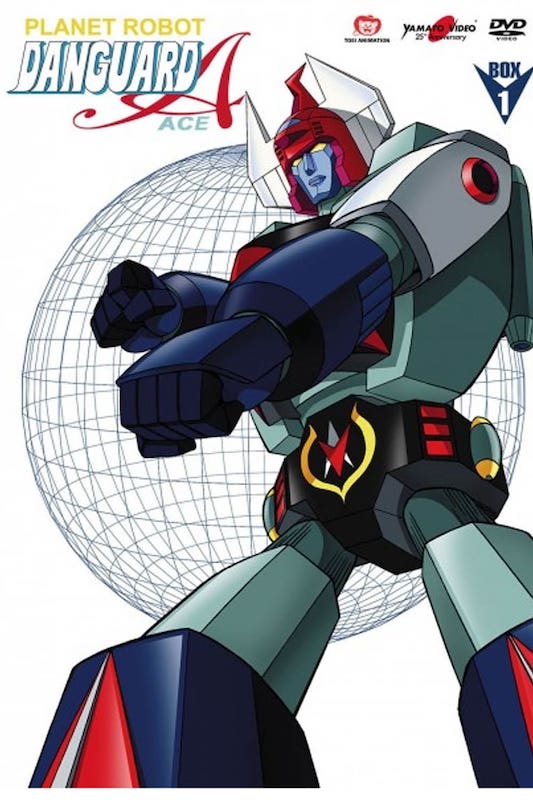
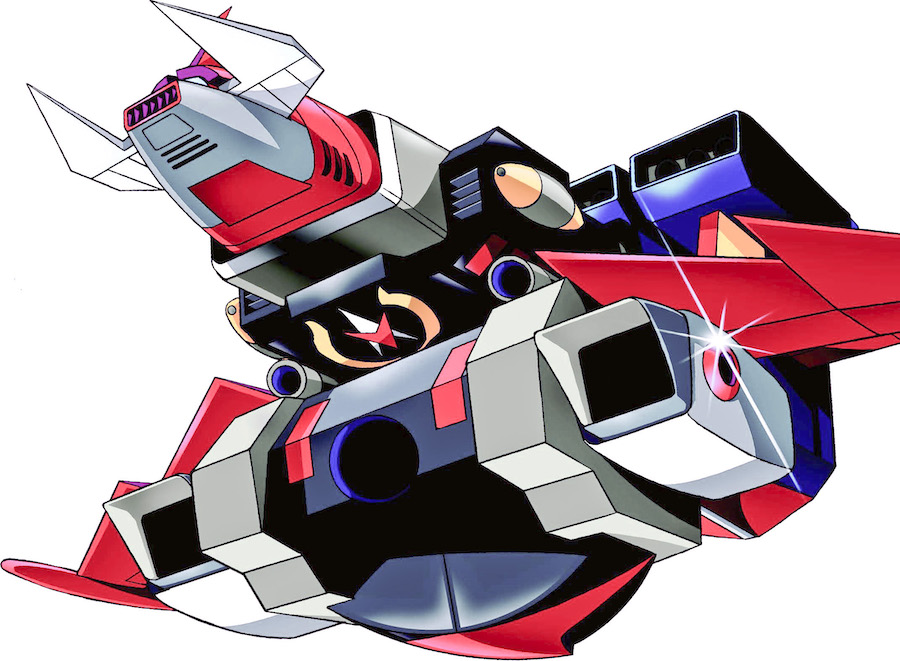
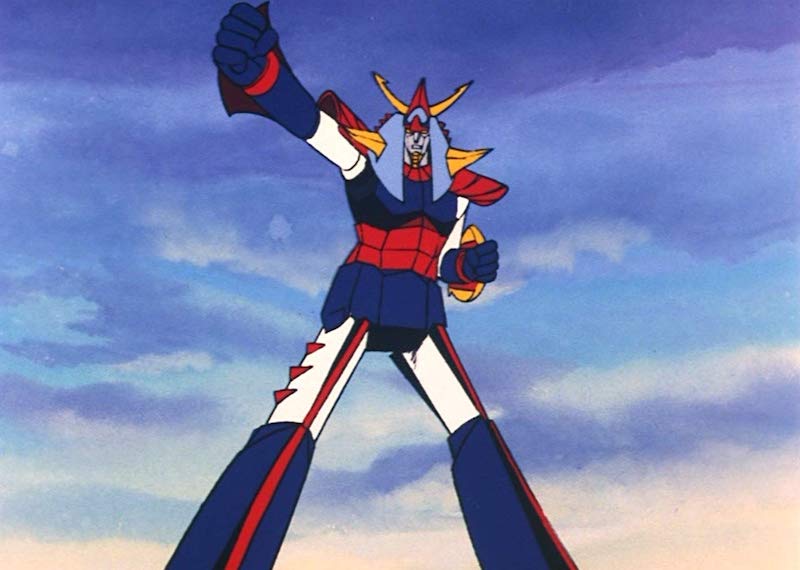
    No super robot show can be discussed without mentioning the hero’s robot. Danguard Ace sports the primary colors familiar to super robots. Red, light gray, blue and black. Instead of the familiar sword it uses a double-headed spear or lance. It transforms into an aircraft that is better described as a flying fortress. The transformation stands out in super robot anime. It separates into 3 pieces which quickly recombine into the other mode. The pieces are not designed to operate independently. Danguard Ace isn’t afraid to be different. Instead of the standard 50 meter height in robot mode, it towers above other anime mecha with a height of 200 meters. That’s a 65 story building! For those of you keeping score, that’s taller than the Ideon and matching the Gunbuster. Also, it has 2 cockpits and operates best when there’s a copilot.

    Planetary Robo Danguard Ace has one of the most intricate storylines of any 70s mecha show. The opening credits features a song so kiddy-ish it almost repelled me. However, from the first episode it was clear the opening credits director and the script writer(s) were not on the same page. The mature and constantly developing story kept me watching. The fact that one episode out of place ruins the show makes it clear why Danguard Ace was never picked up for broadcast on North American television. American television rejects any kids show where the order of episodes can’t be changed. Mazinger Z had a stint on American airwaves because episode order made no difference (for the most part).

    It’s interesting to see a super robot show that tries something different. Most of them give the main robot to the hero in the first episode after which he wins a fight. Mobile Suit Gundam even fits this formula. In Danguard Ace the hero, Takuma, is training hard for a robot that hasn’t been built yet. It isn’t completed until the end of episode 4. In aircraft mode, it is used briefly in episode 5. It appears briefly in robot mode in episode 11 but it isn’t until episode 12 that it sees action.

    The main themes of Danguard Ace are perseverance and dedication. Takuma trains hard and competes with two other pilot candidates. It isn’t until episode 10 that he is chosen as Danguard Ace’s pilot and even then his training continues. Instead of being handed the robot after 12 minutes, Takuma has to earn it.

    Most super robot shows introduce some kind of change halfway through to keep things interesting. This show takes the characters from Earth to space. The first half of the show is rushing to train while defending an island base. This was familiar territory for super robot fans of the time. The second half is rushing to planet Promete in an attempt to beat the Doppler Army which has a space ship of its own. This was a kind of space odyssey reminiscent of Space Battleship Yamato (which Matsumoto worked on).

    Many details bear mentioning. Episode 24 had a touching message of friendship between the nations of Japan and the United States. This message had special meaning for Matsumoto whose father served the Japanese military during World War II. As in Getter Robo G, nazi imagery was used to identify the villains as clearly evil. The scientist Doppler dresses as and refers to himself as “fuhrer”. His soldiers dress as nazi officers of World War II. Most of them have German names. The giant robots sent to battle Danguard Ace are called mecha satans. I think we know who the bad guys are here!

    If you get the chance (and the time) Planetary Robo Danguard Ace is a great sample of 70s super robot action.
    Tags:

  • anime, mecha 04.04.2023 No Comments

    Yuusha Raideen ran from April 1975 to March 1976 on Japanese television and had 50 episodes. It is well remembered in Japan almost 50 years later and after watching it I can understand why. It had everything a super robot show needed to appeal to a large audience plus better attention to story than most in the 70s.

    Akira, in his flight suit, is menaced by Prince Sharkeen of the Demon Empire.

    The show was so popular it has had imitators and remakes. Chouja Raideen (1996) wasn’t a true remake but it certainly tried to cash in on name recognition. RahXephon (2002) was an unofficial remake. Chief director and creator Izubuchi Yutaka stated in an interview he was basically making a modern Raideen. Raideen (2007) was the official remake. That show wasn’t a good offering so I was pleased to discover the original was available from fansubbers. At least three different fansub groups cooperated on the show. Quality level varied greatly. For two episodes the subtitles wouldn’t display so I had to open the source file and read along while the episode played.

    The spelling of the show has been a point of confusion for years. English speakers usually spell it Reideen but a look at the Japanese titles makes it clear “ray – deen” isn’t it. It is pronounced “rye – deen” so I use Raideen.

    1975 gave us a lot of super robot shows but Raideen stood out not only for its quality but also its different approach. Unlike Kotetsu Jeeg, when Raideen tried something different from the crowd it got it right. Where the other super robot shows featured advanced technology, Raideen offered the mystical qualities of the lost civilization of Mu. In the process they neatly dodged the question that plagues many super robot shows: if the enemies are so fearsome, why not build a few more of that super robot? In Raideen no one in modern times can build a giant robot. To heighten the otherworldly qualities, the opponents Raideen battles employ monster sound effects from Toho’s Godzilla movies.

    Raideen
    Raideen was built by the ancient Mu civilization.

    The voice actor for Prince Sharkeen was brilliant. Sharkeen was the main villain for the first half of the show and is featured in most promotional images of the show today. His gung-ho, hot-blooded princely voice made the character dominate every scene in which he appeared.

    Zambot 3 (1977) featured alien invaders who built each episode’s opponent from a scrap heap that was zapped before gelling into a fearsome robot. I now know this was taken from Raideen where the start of many episodes showed us a pile of rocks blessed by the priest of the Demon Empire and then zapped by energy from the statue of demon lord Barao.

    Raideen didn’t take any risks with its color scheme. It stuck to the tried-and-true red, white and blue with yellow trim. This color scheme was common in the super robot shows of the 70s and we shouldn’t be surprised it made it into the Gundam franchise. A dramatic rush through tunnels or tubes to enter the giant robot before a fight was a mainstay of the 70s super robot shows. Raideen featured Akira riding his motorcycle to the rocky outcrop where Raideen was stored so he could make a heroic leap and get caught in midair by Raideen’s energy beam. Not even Go Nagai could top that.

    The supporting characters were very well done. 1975 had several support craft for super robots. Jeeg had a jet that carried its parts to the battlefield. The Getter Robo team had a command/reconnaissance craft. Raideen had the Beluga (or Blue Gar, depending on the team writing the subtitles) that fought alongside. It was piloted by Jinguji, a badass who at times threatened to outshine the hero of the show. Rather that a single genius scientist to support the hero Akira had four. His father, grandfather, an electronics expert and another scientist. This team of scientists and experts made the operation supporting the hero much easier to believe.

    As is the case of many super robot shows, I had to wonder why the Japanese government never made an appearance to ask questions. Also, why did the Raideen team never go on the offensive and try to discover the Demon Empire’s secret base?

    Some super robot shows did a good job of portraying a central theme. Getter Robo emphasized sacrificing one’s ego to work with others as a team. Raideen had no central theme that I could find but it didn’t reduce my enjoyment of the show. It certainly made up for that lack with great story writing. Compared to other mecha shows of the 70s, Raideen had superior writing. Mazinger Z or Getter Robo could mix up the order of the episodes with no real loss. Raideen had many plot points that unfolded slowly through the episodes. The resolution of the show was a satisfying drama that unfolded over the course of more than five episodes.

    Raideen is a super robot that no anime fan should miss. I wish a fan subbing group with more polish would clean up the subtitles and make sure they display for every episode. A blu ray release for North American would definitely earn my dollars.

    Tags: